
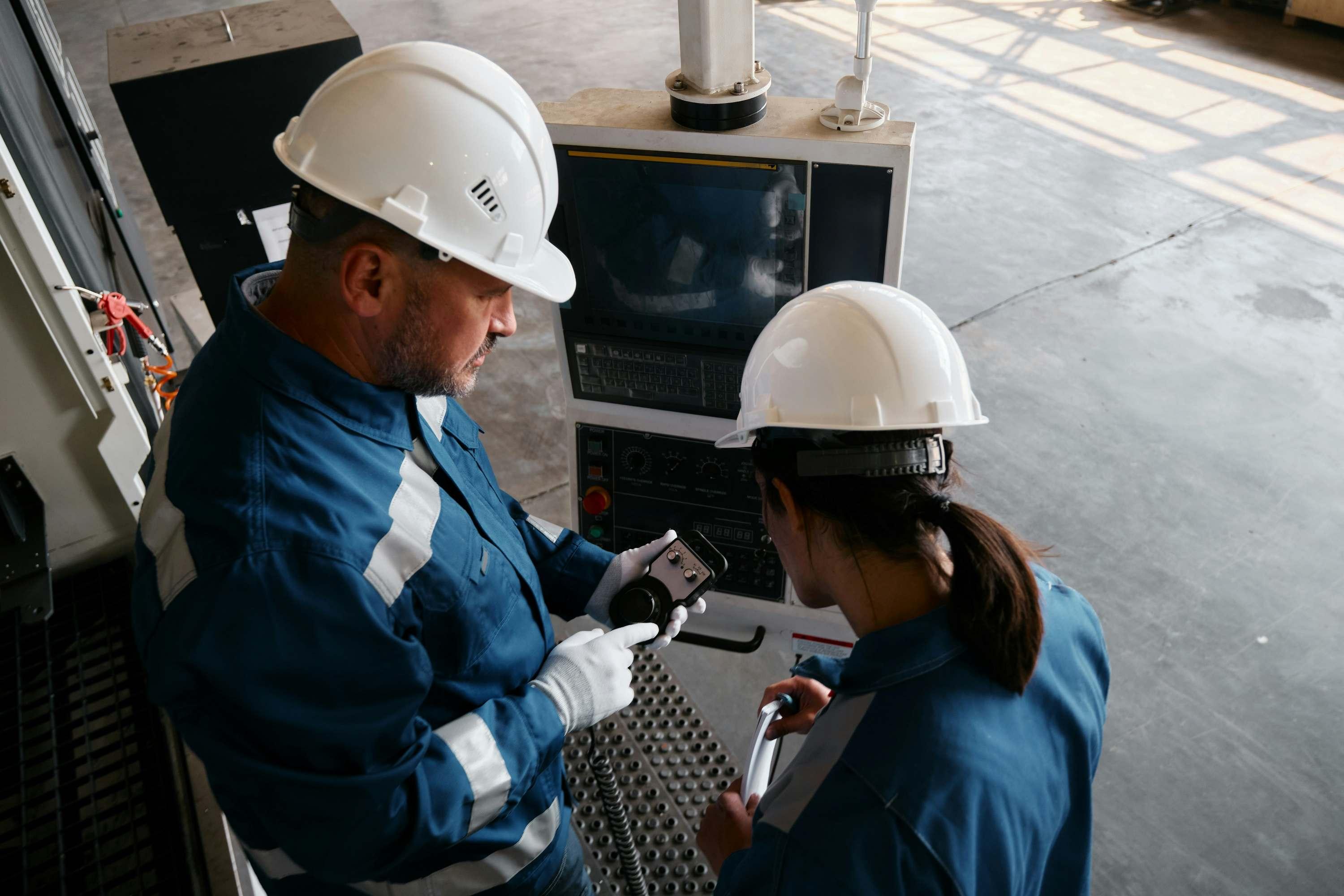
Touch Integration
- Cockpit touchscreens
- Mission console interfaces
- Industrial HMI panels
- Ground support equipment
- Outdoor kiosk displays
Glove-compatible PCAP with optical bonding for wet and harsh environments.
Polytronix integrates touchscreens into display assemblies for aerospace, defense, and industrial applications - resistive and projected-capacitive (PCAP), optically bonded and glove-compatible, supporting gloved operation, wet environments, and harsh conditions from -40°C to +85°C.
Overview
Polytronix integrates touchscreens into display assemblies for aerospace, defense, and industrial applications. Our solutions support gloved operation, wet environments, and harsh conditions with optically bonded touch sensors.
At a Glance
| Certifications | AS9100D, ISO 9001 |
|---|---|
| Program Fit | Aerospace, Defense, Industrial |
| Core Strengths | Glove-compatible, Optical Bonding |
| Typical Deliverables | Touch Display Assemblies |
| Order Quantities | Low Minimum Order Quantities |
Touch Integration Types
Touch Technologies
- Projected-capacitive (PCAP) touch integration
- Resistive touchscreen integration
- Glove-compatible PCAP stackups
- Multi-touch operator interfaces
- Custom-sized touch sensors
Controller & Tuning
- Wet-finger and rain-rejection tuning
- Touch controller integration and tuning
Optical & Cover Glass
- Optically bonded touch sensors
- Cover-glass lamination and edge sealing
- Sunlight-readable touch stackups
- Chemically strengthened cover glass
Ruggedization & Integration
- EMI-shielded touch assemblies
- Panel-mount and bezel-integrated touch assemblies
- Ruggedized touch display systems
Technical Specifications
| Deliverables | Touch-integrated display assemblies, touch panels |
|---|---|
| Integration Types | Resistive, PCAP, optical bonded, glove-compatible |
| Ruggedization Options | Chemically strengthened glass, sealed edges, EMI filtering |
| Environmental Properties | -40°C to +85°C, multi-touch, wet/glove operation |
| Form Factors | Integrated with display, standalone panels, custom sizes |
| Supported Industries | Aerospace, Defense, Industrial, Medical |
Relevant Applications
Cockpit and mission touchscreens
Glove-compatible touch interfaces for cockpit instrumentation, mission consoles, and avionics platforms requiring sunlight readability, NVIS compatibility, and reliable operation under vibration and wide-temperature conditions.
Explore NVIS SolutionsIndustrial HMI panels
Touch-integrated operator terminals for industrial control panels, automation equipment, and process-control interfaces requiring durable cover glass and dependable input in contaminated or wet environments.
Explore Industrial EquipmentMedical and diagnostic interfaces
Touch assemblies for medical and laboratory equipment requiring cleanable surfaces, controlled assembly, and traceability under quality-managed manufacturing processes.
Explore Medical & Life SciencesSelf-service and kiosk displays
Ruggedized touch displays for outdoor kiosks, ground-support terminals, and public-access systems requiring sunlight-readable performance, impact-resistant cover glass, and wet-finger touch reliability.
Explore DisplaysGround support and field equipment
Touch interfaces for maintenance systems, automated test equipment, and deployable field platforms requiring sealed, glove-compatible operation in harsh outdoor conditions.
Explore Ground SystemsInstrument panels and operator consoles
Integration of touch surfaces into instrument panels and operator consoles alongside switches, encoders, and annunciators to form complete human-machine interfaces.
Explore Instrument PanelsRetrofit and modernization programs
Touch-display upgrades replacing legacy non-touch or mechanical interfaces, supporting modernization of existing systems with multi-touch operation and improved readability.
Explore MROCustom engineered touch platforms
Customer-specific touch systems designed around unique cover-glass, sensor, environmental, or interface requirements for aerospace, defense, medical, and industrial programs.
Explore EngineeringRelevant Capabilities
Projected-capacitive (PCAP) integration
Integration of projected-capacitive touch sensors into ruggedized display assemblies for multi-touch operator interfaces. PCAP stackups can be tuned for gloved operation and configured for the cover-glass thickness and environmental sealing each program requires.
Resistive touch integration
Integration of resistive touchscreens for applications requiring activation by any object, stylus operation, or simpler controller electronics. Resistive panels suit field-deployed and industrial environments where contaminants or mixed-input conditions are expected.
Glove and wet-finger tuning
Touch controller tuning to support gloved operation and wet-finger or rain-rejection performance for cockpit, field, and outdoor HMIs. Sensitivity, palm rejection, and false-touch thresholds are configured to the operating conditions of the platform.
Optical bonding of the touch sensor
In-house optical bonding of the touch sensor, display, and cover glass to eliminate internal air gaps, improve contrast, reduce reflection, and increase impact resistance for sunlight-readable harsh-environment assemblies.
Explore Optical BondingCover-glass lamination and protection
Lamination of chemically strengthened cover glass with optional anti-reflective and anti-glare treatments. Edge sealing and cover-glass selection support impact resistance, scratch durability, and moisture protection for the assembled stackup.
Touch controller integration
Integration of touch controller electronics, firmware configuration, and interface wiring to host display-control systems. Controllers are selected and tuned to the sensor, cover-glass stackup, and host interface defined by the program.
Explore PCB AssemblySunlight-readable and EMI-managed stackups
Touch stackups configured for high ambient-light readability with attention to EMI considerations, including shielding and grounding strategies that protect touch performance in high-EMC cockpit and industrial environments.
Explore DisplaysRuggedized touch assemblies
Touch-integrated assemblies configured for vibration resistance, environmental sealing, wide-temperature operation, and EMI protection for aerospace, defense, and field-deployed platforms requiring long-term operational reliability.
Explore RuggedizationDisplay and HMI integration
Integration of touch sensors with displays, bezels, controls, and operator-interface hardware into complete HMI systems supporting cockpit, mission-system, medical, and industrial-control applications.
Explore Electro-MechanicalStandards and Compliance
Process and workmanship
- IPC J-STD-001 - Soldered Electrical and Electronic AssembliesConformance
- IPC-A-610 - Acceptability of Electronic Assemblies, Class 2/3Conformance
- ANSI/ESD S20.20 - ESD-controlled production environmentsReferenced
Integration capabilities
- Optical bonding of touch sensor, display, and cover glass
- Touch controller integration, firmware configuration, and tuning
- Glove-compatible and wet-finger sensitivity configuration
- Cover-glass lamination, edge sealing, and EMI shielding
Referenced environmental and EMC standards
- MIL-STD-810 - Environmental Engineering Considerations and Laboratory TestingConformance
- DO-160 - Environmental Conditions and Test Procedures for Airborne EquipmentConformance
- MIL-STD-461 - Electromagnetic Interference (EMI/EMC) RequirementsConformance
Conformance claimedReferenced
Frequently Asked Questions
- Who integrates touchscreens into ruggedized display assemblies?
- Polytronix integrates touchscreens into display assemblies for aerospace, defense, and industrial applications. Solutions support gloved operation, wet environments, and harsh conditions with optically bonded touch sensors. Integration types include resistive, PCAP, optical bonded, and glove-compatible stackups, delivered as touch-integrated display assemblies and touch panels.
- Does Polytronix make glove-compatible PCAP touchscreens?
- Polytronix builds glove-compatible PCAP with optical bonding for wet and harsh environments. Projected-capacitive (PCAP) stackups can be tuned for gloved operation and configured for the cover-glass thickness and environmental sealing each program requires, with wet-finger and rain-rejection tuning for cockpit, field, and outdoor HMIs.
- Does Polytronix do optical bonding of the touch sensor?
- Polytronix performs in-house optical bonding of the touch sensor, display, and cover glass to eliminate internal air gaps, improve contrast, reduce reflection, and increase impact resistance for sunlight-readable harsh-environment assemblies. Cover-glass lamination uses chemically strengthened cover glass with optional anti-reflective and anti-glare treatments plus edge sealing.
- What ruggedization and standards does Polytronix apply to touch assemblies?
- Polytronix ruggedizes touch assemblies with chemically strengthened glass, sealed edges, and EMI filtering for -40°C to +85°C, multi-touch, wet/glove operation. Work references IPC J-STD-001, IPC-A-610 Class 2/3, and ANSI/ESD S20.20 for process and workmanship, and MIL-STD-810, DO-160, and MIL-STD-461 as environmental and EMC standards.
Discuss Your Touch Requirements
Share your display and touch requirements. We confirm sensor type, bonding, and glove/wet-finger performance before build.
Quality & Compliance
Polytronix maintains active third-party registrations spanning aerospace, medical, automotive, and environmental quality systems, verified by accredited registrars.
View Certifications- Registered: AS9100DAerospace QMS · Registrar: PRI Certification
- Registered: ISO 9001:2015Richardson, TX · Registrar: PRI Certification
- Registered: ISO 13485:2016Medical devices
- Registered: ISO 14001:2015Environmental
- Registered: IATF 16949:2016Automotive
- Registered: FAA Part 145Repair Station 8PTR524C
- Compliant: EASA Part 145US–EU bilateral recognition
- Registered: ITARDDTC registration